How perks data can inform smarter property decisions
Discover how perks data helps property teams make smarter decisions, improve tenant experience, and increase retention with actionable insights.
Most property decisions still rely on lagging indicators. Occupancy rates. Lease renewals. Rental benchmarks. These tell you what already happened, not what tenants actually value.


That gap is where many portfolios underperform.
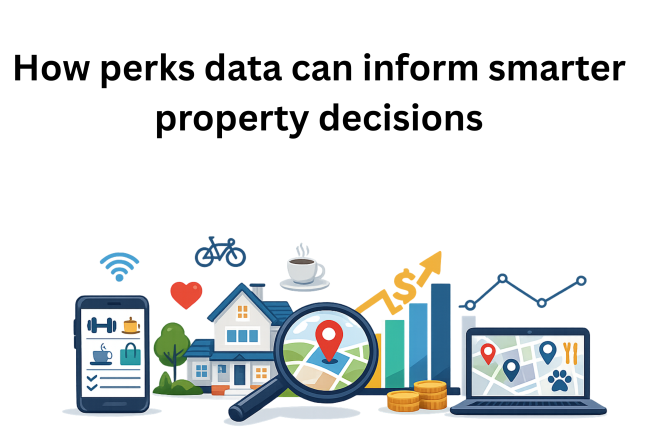
Perks data changes this. It surfaces real behavioral signals—what tenants engage with, what they ignore, and what subtly influences retention. When used well, it becomes a decision layer, not just a marketing add-on.
If you’re thinking about how perks fit into your property strategy, this breakdown on building a curated perks ecosystem for tenants and owners gives useful context on how the model works in practice.
But the real value sits deeper in the data.
Why Traditional Property Metrics Fall Short
Most enterprise property teams operate on structured but incomplete datasets.
You track:
-
Lease durations
-
Renewal cycles
-
Vacancy trends
-
Market comps
But none of these explain why tenants stay or leave. And that’s the problem.
Two buildings can show identical occupancy, yet one has fragile tenant satisfaction while the other has strong long-term stickiness. Without behavioral insight, both look the same on paper.
Perks data starts to fill that gap.
What “Perks Data” Actually Means
This isn’t about offering random discounts.
In a curated perks marketplace, every interaction creates a data point:
-
What categories do tenants engage with
-
Frequency of usage
-
Timing patterns (weekday vs weekend, seasonal spikes)
-
Individual vs team-level engagement
-
Drop-offs and inactive segments
When delivered through a white-label offering platform, this data becomes directly tied to your property, not a third-party ecosystem.
That distinction matters. You’re not borrowing insights, you’re owning them.
From Engagement to Insight: What the Data Reveals
Perks data is less about volume and more about pattern recognition. Over time, it helps answer questions that property teams usually guess at.
1. What Tenants Actually Value (Not What You Assume)
Amenities are often designed based on industry trends.
But perks engagement tells you the following:
-
Are wellness benefits used more than dining offers?
-
Do tenants respond to productivity tools over lifestyle perks?
-
Is there demand for family-oriented benefits in commercial spaces?
This shifts decisions from assumption to evidence.
2. Tenant Segmentation at a Behavioural Level
Most segmentation is firmographic—company size, industry, and lease value.
Perks data adds behavioral layers:
-
High-engagement tenants vs passive occupants
-
Teams that prioritise convenience vs experience
-
Cost-sensitive vs premium-oriented users
This lets you design differentiated tenant experiences without over-investing across the board.
3. Early Signals of Retention Risk
A drop in perks engagement often precedes broader disengagement.
You’ll start noticing:
-
Reduced interaction with benefits
-
Lower participation in new offerings
-
Declining usage from previously active tenants
These are subtle signals. But they often show up before lease conversations change tone. That gives property teams time to intervene early.
How This Impacts Property Decision-Making
The shift is practical. It’s not about adding complexity; it’s about making existing decisions sharper.
Leasing Strategy Becomes More Targeted
Instead of generic positioning, you can align leasing narratives with actual tenant behaviour.
If data shows strong engagement with wellness and flexibility perks, your positioning can reflect that reality—not a generic “premium workspace” claim.
Amenities Investment Becomes Evidence-Led
Capital allocation improves when you know what drives engagement.
Rather than upgrading underused physical amenities, you might:
-
Expand high-performing perk categories
-
Introduce partnerships aligned with tenant demand
-
Reduce spend on low-impact features
This keeps investments tighter and more relevant.
Tenant Experience Moves from Static to Adaptive
Traditional tenant experience programs are fixed.
Perks data enables iteration:
-
Adjust offerings based on usage trends
-
Introduce seasonal or demographic-specific perks
-
Retire underperforming benefits
The experience evolves with the tenant base, not against it.
The Role of a Curated Perks Marketplace
A curated perks marketplace is not just a distribution layer.
Its value comes from intentional design:
-
Only relevant, high-quality offers
-
Alignment with tenant profiles
-
Continuous optimisation based on data
Without curation, data becomes noisy. With it, patterns become clearer.
This is where many implementations fail—they focus on quantity, not relevance.
Why White Label Matters More Than It Seems
A white-label offering platform ensures the experience sits within your brand environment.
But more importantly, it ensures the following:
-
Data ownership stays with you
-
Insights are directly tied to your tenant base
-
There’s no dependency on external platforms for interpretation
This turns perks from a vendor-driven feature into a strategic asset.
Turning Data into Action: What Leading Teams Do Differently
The difference is not access to data. It’s how it’s used. High-performing property teams treat perks data as an operating input.
They:
-
Integrate perks insights into quarterly planning
-
Align leasing, marketing, and experience teams around shared data
-
Use engagement trends to inform both short-term tweaks and long-term strategy
This creates consistency across decisions. Not isolated improvements.
Common Mistakes to Avoid
There are predictable pitfalls.
Treating Perks as a Marketing Add-On
If perks are only used for tenant acquisition, you miss their long-term value. The real impact shows up in retention and engagement.
Overloading the Marketplace
More offers do not mean better outcomes. Too many irrelevant options dilute engagement and distort data.
Ignoring Low Engagement Signals
Low usage is often dismissed as a feature problem. In reality, it’s a signal—about misalignment, communication gaps, or shifting tenant needs.
The Strategic Shift
Perks data changes how property value is understood.
It moves the conversation from
-
“What do we offer?”
to -
“What actually drives tenant behavior?"
That shift matters.
Because in competitive markets, small behavioral insights compound into meaningful advantages—better retention, stronger positioning, and more efficient capital allocation.
Closing Perspective
Property decisions are becoming less about physical assets alone and more about experience layers built around them.
Perks sit at that intersection. But their real power is not in the offers themselves. It’s in the data they generate and how that data is used to guide decisions.
Most portfolios already have enough information to improve outcomes. They just don’t have the right signals.
Perks data, when structured through a curated system and owned via a white-label approach, starts to provide exactly that—clear behavioral insight that connects directly to business performance. And once that layer is in place, decisions stop being reactive.
They become informed.
What's Your Reaction?